| | | | EDITORIAL BY PATRICK ALEXANDRE
| Founder & CEO
| When we founded CROSSJECT, our promise could be summed up in three words: to save lives. Twenty-five years later, that promise remains unchanged. What has changed is the robustness we have built at every level to fulfill that commitment. Building this robustness has indeed been a key thread running through our journey. And I want to share its various facets here, so that everyone—employees, partners, and shareholders—can understand where we’ve come from and where we’re headed.
| First and foremost, this robustness is based on solid and ambitious partnerships. This is clearly the case with the BARDA* contract, which has just signed an amendment consolidating the pediatric development plan for ZEPIZURE® in accordance with the FDA’s expectations. This amendment brings the total value of the contract to over $170 million if all options are exercised. Behind this figure lies a strong signal: a leading U.S. regulatory agency is supporting our program over the long term—from adults to children—and reaffirming its confidence in the role that ZEPIZURE® is set to play in emergency response in the United States. For us, having started in a laboratory in Dijon, this public trust is an immense responsibility and a source of daily commitment.
*Biomedical Advanced Research & Development Authority - contrat n° 75A50122C00031
|
|
|
|
| | | | Why has CROSSJECT chosen to go beyond industry standards?
| The creation of ZENEO® is a revolution, conceived in the spirit of Apple: a creative act based on the patient’s real needs—both conscious and unconscious.
| To ensure universal efficacy and safety, we broke all the rules and pushed the boundaries of technology. Saving a life in an emergency required overcoming some major barriers:
| | • | no needle to prevent injuries,
|
| | • | intramuscular administration for immediate action,
|
| | • | built-in pyrotechnics for an instant injection faster than the human reflex,
|
| | • | intuitive simplicity so that anyone can use it—even in the middle of a panic—without instructions or training.
|
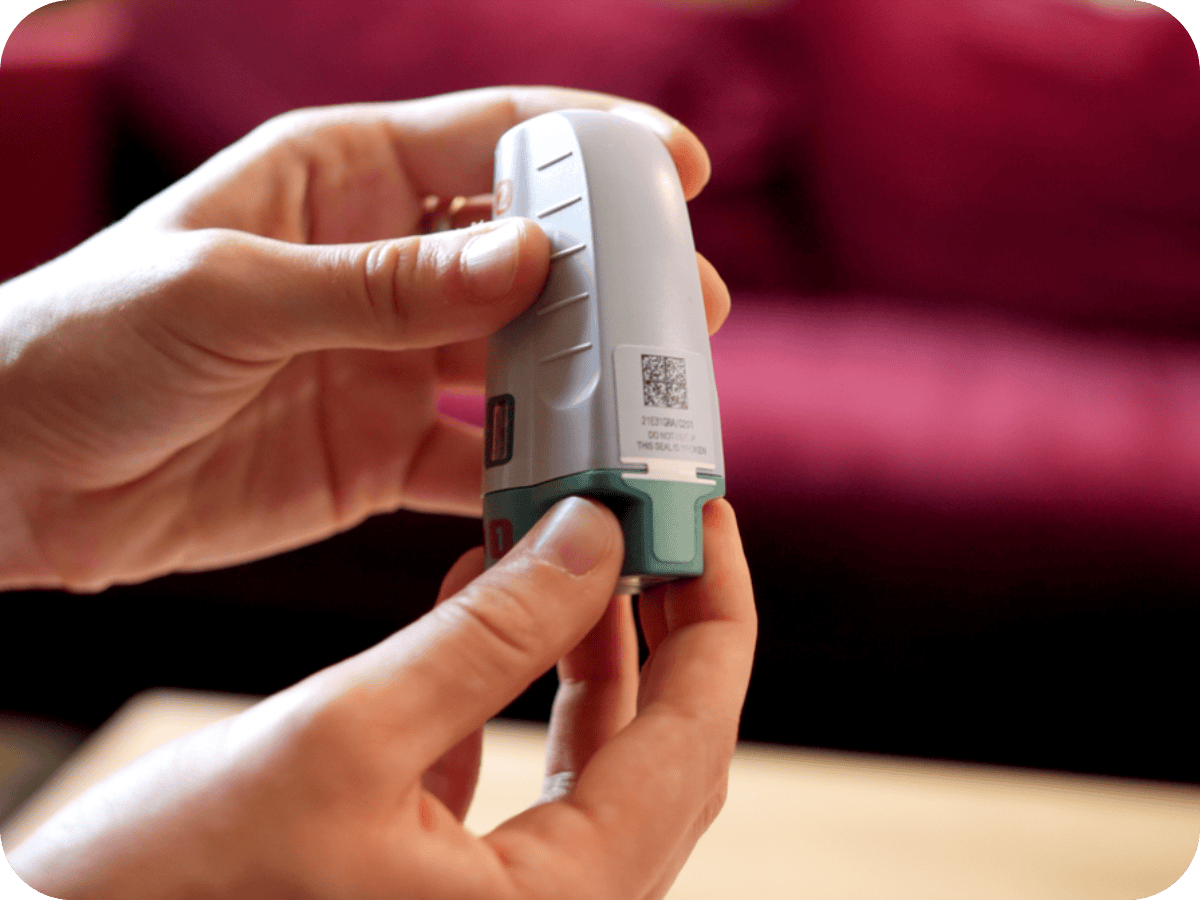
| It was a bold choice, and the journey was demanding. Tested under real-world conditions during the “Hazmat*” study, the ZENEO® needle-free autoinjector achieved a 98% success rate (369 successful injections out of 375), despite extreme situations. Most importantly, the only 6 deviations from the “protocol” were, in fact, intramuscular injections: the primary mission was therefore 100% successful.
| This real-world effectiveness far outperforms conventional injectors—provided we don’t fall into the trap of relying exclusively on laboratory studies. According to independent academic studies**, 100% effectiveness in the laboratory can drop to between 60% and 80% in real-world situations.
| In addition to safe and effective administration, ZENEO® is designed to be easy, intuitive, and fast for everyone.
| * A Human Factors validation study simulating a disaster (chemical poisoning) involving 75 participants.
| ** Brown JC, Tuuri RE, Akhter S, Guerra LD, Goodman IS, Myers SR, Nozicka C, Manzi S, Long K, Turner T, Conners GP, Thompson RW, Park E. Lacerations and Embedded Needles Caused by Epinephrine Autoinjector Use in Children. Ann Emerg Med. 2016;67(3):307-15 e8.
What methods have enabled CROSSJECT to demonstrate ZENEO®'s real-world effectiveness?
| These methods fall under the scope of “Human Factors engineering.” Once the technology has been stabilized and its mechanisms can be reproduced indefinitely, the user becomes the primary variable affecting effectiveness that requires attention.
| Behavior and interactions with ZENEO® must therefore be analyzed in minute detail. Under real-world conditions, we break down each of the participants’ actions to detect even the slightest error, difficulty, or hesitation. We evaluate approximately 40 criteria per participant (including 15 during the injection). A comprehensive debriefing then allows us to understand each individual’s underlying needs and the root causes of their reflexes. In a study with 100 participants, this amounts to 4,000 elements evaluated in detail.
| This iterative process (analysis, correction, re-evaluation) aims to eliminate any potential issues. It goes beyond basic effectiveness and safety: it’s not just about verifying whether the user can open the cap, but whether they intuitively recognize it, understand how to twist it, know where to place their hands, then do so and know they’ve done it correctly.
| To achieve this, we test a wide variety of use cases: patients, caregivers, untrained bystanders, medical or emergency personnel, trained or untrained individuals, with or without instructions, instinctive or methodical users, in emergency situations, in the hospital, at home, and so much more.
| How many Human Factors studies have been conducted?
|
|
|
|
| | | | Dive into the heart of Human Factors research!
| |
|
|
|
| | | | | CROSSJECT Strengthens Its Governance to Support Its Next Phase of Growth
| On September 24, CROSSJECT expanded its Management Board to five members, with Olivier Lacombe, Didier Morin and Lionel Seltz joining Patrick Alexandre and Isabelle Liebschutz.
| This evolution brings together expertise in pharmaceutical development, manufacturing, quality and finance at the governance level, supporting the company's industrial scale-up and next steps toward commercial deployment.
|
|
| | | CROSSJECT Secures Additional BARDA Funding to Advance Pediatric ZEPIZURE®
| CROSSJECT has secured an additional $4.7 million in funding from BARDA to support the pediatric development of ZEPIZURE®, in line with FDA recommendations.
| The amendment extends the contract through June 2030 and brings total funding allocated to the treatment's development to $48 million, without affecting the Emergency Use Authorization (EUA) process for adults.
|
|
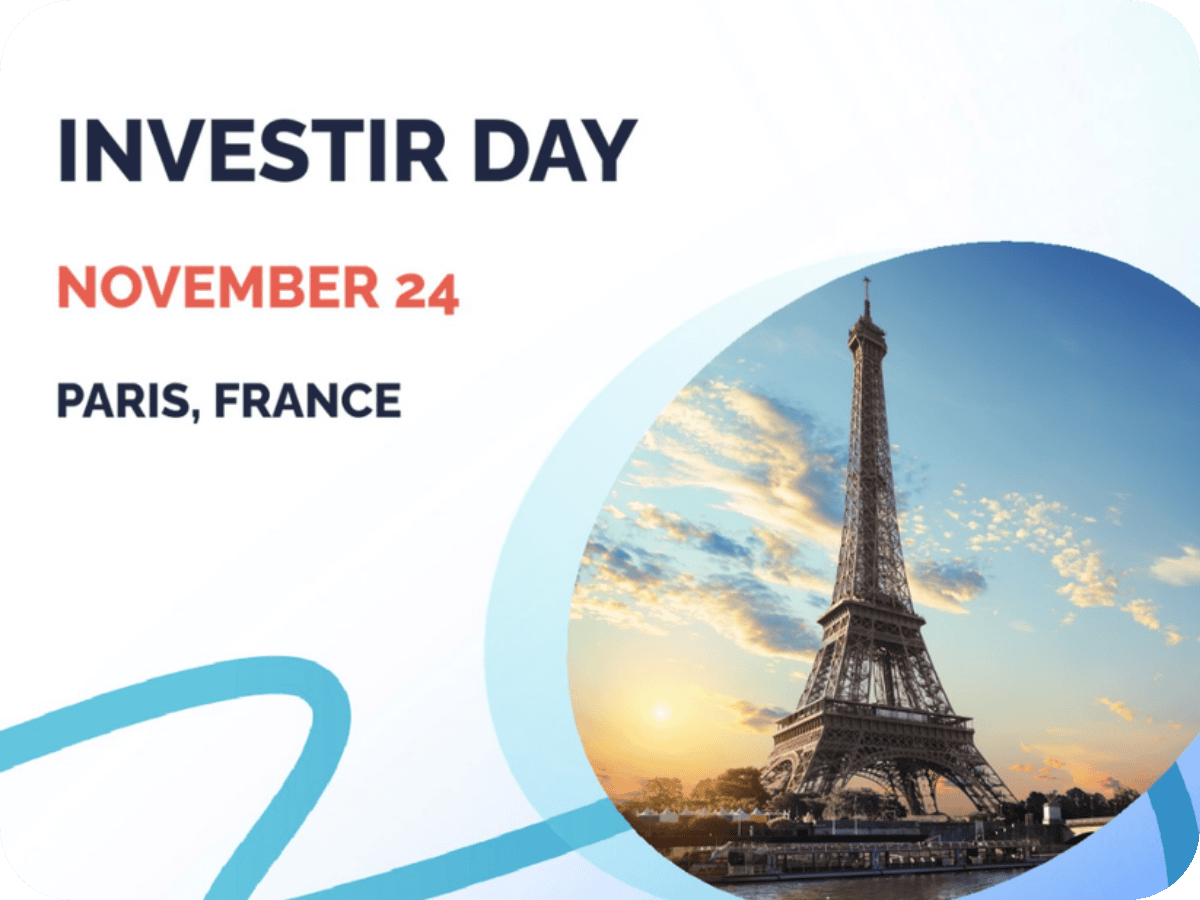
| | | CROSSJECT will meet with investors at Investir Day
| For the first time, CROSSJECT will participate in Investir Day, taking place in Paris on November 24, an event dedicated to connecting companies with individual investors.
| The event will provide an opportunity for CROSSJECT to engage directly with investors, answer their questions and share the company's latest developments.
|
|
|
|
| | | You received this email because you subscribed to this newsletter
| |
|
| | |
|